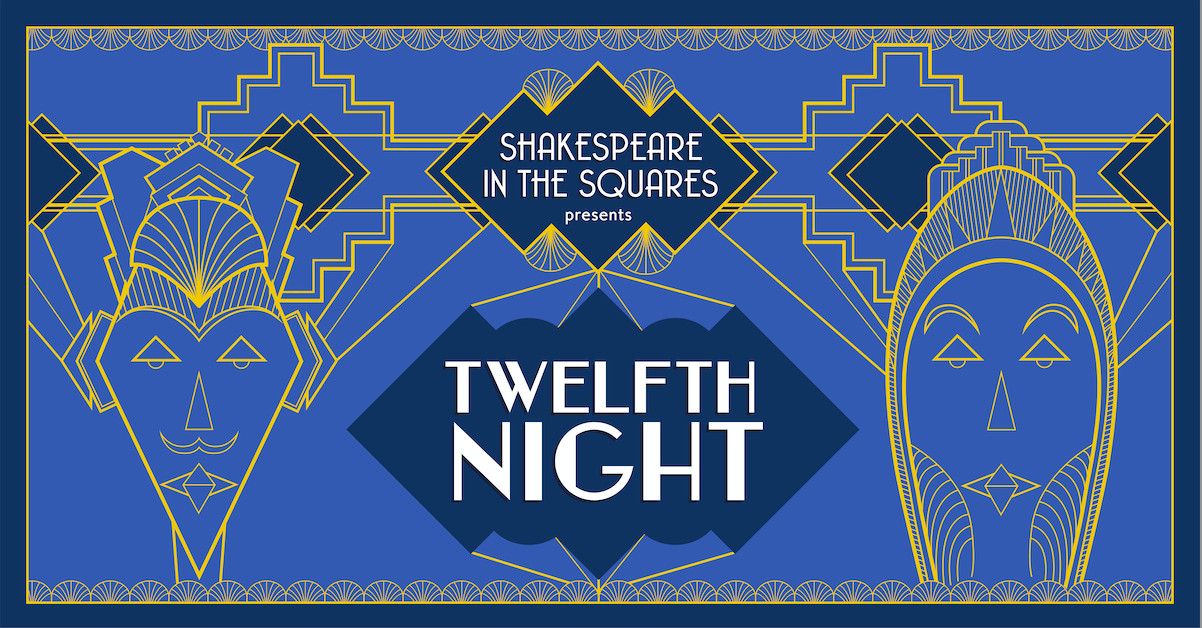
Shakespeare in the Squares is a not-for-profit touring theatre company that stages a Shakespeare play in London garden squares for one night in each venue every summer. The productions are tailored to the individual venues, and we work with the committees and other local organisations to create a unique community celebration around the play.
Our aim is to provide a showcase for talented young theatre practitioners and we intend to introduce our audiences to the stars of the future. We pay the actors Equity recommended rates and the productions are innovative, exciting and of the highest professional standard. Productions are funded through a combination of ticket sales, grants and sponsorship from local businesses and organisations.
Twelfth Night or What You Will
“If music be the food of love, play on…”
Twelfth Night is one of Shakespeare’s most loved romantic comedies and, like last year’s The Tempest, it also begins with shipwreck and loss. It focusses on a young woman, (Viola) who believes that she has lost her twin brother (Sebastian), and how her actions to survive catalyse the world around her. This is a world replete with distinctive characters from every walk of life: countesses, stewards, sea-farers, priests, fools and knights; characters epicurean and puritan, generous and cruel, naive and wise.
Shakespeare’s understanding of the human condition is profound and complete. Writing a programme note, it’s hard to commit to one idea or interpretation, because he offers several prismatic lenses on who we are, what we most desire and what we are prepared to do to fulfil it.
This is especially true for Twelfth Night. It seems incredibly modern – tackling questions of identity, gender and sexuality. It’s poetic and philosophical in its examination of love and madness, longing and loss. It intrigues through disguise, duality and deception and it is deeply satisfying in its final revelation.
Why does Shakespeare make such an effort to reflect these different facets of humanity in Twelfth Night? And what, if anything, do we learn from all these refracted images of our unique selves? Could he be trying to show us that despite the differences in our identities – of gender, sexuality, class or origin – we are unified by something that surpasses all these: – the universal need to be loved.