When we published the Outdoor Arts Sector Strategy Delivery Plan, we wanted to do more than set out a list of actions. We wanted to start a conversation about how our sector develops artwork, workforce and opportunities, and what we might need to do differently if we want to build a stronger future for outdoor arts.
The Delivery Plan is built around a simple observation: outdoor arts develops differently from most other artforms.
Our work is shaped through the relationship between artistic ambition, public space and diverse audiences. While a piece may begin in a studio, it often reaches maturity through a process of testing, adapting and refining work in front of audiences. During the development of the Delivery Plan, we heard examples of work taking up to a year of touring before it fully reached its potential.
This process is one of our greatest strengths. It helps outdoor arts create work that resonates with a remarkably broad range of people. But it also creates a challenge.
Much of our development activity is hidden within presentation activity. As a result, the development of artwork and workforce is easily overlooked and under-resourced.
At a time when opportunities are under pressure and funding systems often prioritise outputs over development, the sector can find itself focusing on presentation at the expense of the processes that make excellent work possible in the first place. In short, we risk becoming increasingly focused on presentation activity while the development activity that underpins artistic excellence becomes harder to see, harder to articulate and harder to fund.
The Delivery Plan suggests what we might do about this.
Building Stronger Development Ecologies
The central idea in the Delivery Plan is that we need to become more intentional about how outdoor arts develops as a collective.
What might that look like in practice?
Developing Excellent Artwork
We heard time and again that a piece of work often needs four or five early performances before it is ready for final presentation and touring. Yet these early performances are often viewed as the presentation of a finished product rather than recognised as an essential part of the development process. These opportunities allow artists to learn how the work functions in public space, how audiences respond, and what needs to change.
Many organisations already support this development journey successfully. The Delivery Plan does not seek to replace these approaches. Instead, it asks whether we could become more intentional about connecting them, so that development opportunities form clearer pathways across the sector.
For example, could a network of festivals collectively support those first development performances and help a piece reach maturity? Could another group of festivals then provide more prominent presentation opportunities so that the work can progress to larger platforms, national touring opportunities or international audiences?
The Delivery Plan encourages us to think less about isolated opportunities and more about development pathways. The key is to consider what the full development journey might look like and organise ourselves around it.
The Delivery Plan also pays attention to the balance of artist and festival relationships. Artists have developed their own testing and development frameworks, spaces and opportunities, and therefore form a vital part of the development ecology. They are central to this conversation.
Developing Excellent Workforce
Much of workforce development already happens across the sector through mentoring, peer learning, shadowing, assistantships, apprenticeships and work placements. The Delivery Plan argues that these opportunities should be embedded more intentionally within the development of artwork itself.
Just as artwork develops through practical presentation in public space, so does the workforce that makes outdoor arts possible. By building development opportunities into projects from the outset, we can strengthen the sector’s long-term resilience while also contributing to wider policy priorities around skills, children and young people, and pathways into employment.
Developing Partnerships that Strengthen the Ecology of Artwork and Workforce Development
These partnerships can take many forms. Some may be regional networks bringing together artists, producers and festivals within a particular place. Others may emerge around a particular discipline such as dance, circus, carnival or puppetry. Others may be built around shared priorities such as young people or rural touring.
The Delivery Plan also recognises that partnerships can emerge around large-scale projects. Historically, ambitious projects have often created opportunities for artists, producers, technicians and organisers who later established their own companies, festivals and careers. In doing so, they contributed not only to the creation of artwork, but to the development of the wider sector.
There is no single model, and no single organisation can carry the weight of responsibility.
Given the publicly embedded way our sector develops artwork and workforce, each of us forms part of the development infrastructure. Festivals, artists, producers, commissioners, local authorities, community organisations and national partners all contribute different pieces of the puzzle. Stronger connections between those pieces will help create a stronger national development ecology.
The Delivery Plan therefore encourages all of us to think beyond our own programmes and organisations and connect with each other. How can our activity contribute not only to the work we present today, but to the artists, workforce and opportunities that will shape the sector tomorrow?
Be Ambitious
We recognise that this may feel ambitious.
Many organisations are working with limited resources, small teams and significant pressures. It can feel difficult to think beyond immediate delivery needs.
However, if we only ask for what seems possible within today’s constraints, we risk reinforcing the very conditions that are holding the sector back.
The Delivery Plan is intended to help us articulate what outdoor arts actually needs to thrive. That includes recognising development activity as a core part of artistic excellence, building stronger workforce pathways, and creating the partnerships and infrastructure that allow great work to emerge.
This is why OAUK is already using the Delivery Plan in conversations with Arts Council England and other sector partners. We will continue to advocate for greater recognition of development activity, investment models that reflect how outdoor arts develops, and support for the workforce that underpins our sector.
But advocacy alone will not deliver change.
The strongest case we can make is through the ambitions we set ourselves and the partnerships we build together.
If you are developing an NPO application, project grant, artist development programme, apprenticeship scheme, commissioning network or regional partnership, we encourage you to use the Delivery Plan as a framework for your thinking.
Ask yourself:
- How does this activity contribute to the development of artwork, not just its presentation?
- How does it support workforce development?
- What partnerships could strengthen its impact?
- How does it contribute to a wider development ecology?
And if you’re looking for collaborators, connections or examples, get in touch.
Keep the Conversation Going
One of OAUK’s most important roles is helping connect the dots across the sector. We can help identify potential partners, share emerging ideas, highlight examples of good practice and strengthen the collective case for investment.
The Delivery Plan provides a shared direction of travel. What brings it to life is the work we do together.
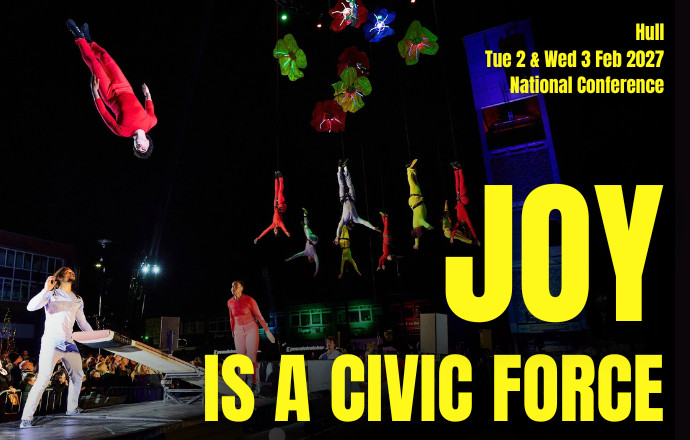
Continue the conversation by becoming a member of OutdoorArtsUK, joining a national network of outdoor arts professionals working together to strengthen outdoor arts. Join us at our National Conference 2027: Joy is a Civic Force this February as we come together to explore these ideas, build new connections and shape the future of the sector. And if you have any thoughts, questions or opportunities you’d like to discuss, please don’t hesitate to get in touch with us by email.