On 26 November, our Director Sho Shibata spoke at a webinar organised by The Audience Agency. The webinar included a data rich presentation from Jonathan Goodacre on how diverse outdoor arts audiences are. Compared to the audience diversity data of other funded arts sectors, our audience reach is still most reflective of the population demographic of UK.
Watch Back the Full Session
Outdoor Arts Audiences – Evidence & Provocation
This blog is a digestible summary of the webinar, why outdoor arts matters, and a call to action for the wider arts sectors to work with us to reach a wider cross section of the UK population.
What We Learned from The Audience Agency
Outdoor arts audiences had historically been under-researched compared with venue-based artforms because most events are unticketed and thus have no box-office data to track attendance, and the open access nature of our work means audiences drift in and out, making surveying difficult.
Despite this, the Audience Agency has built an effective way of data capturing, and has collected one of the most extensive datasets in the UK to understand who attends outdoor arts and why.
Outdoor Arts Reach Large and Diverse Audiences
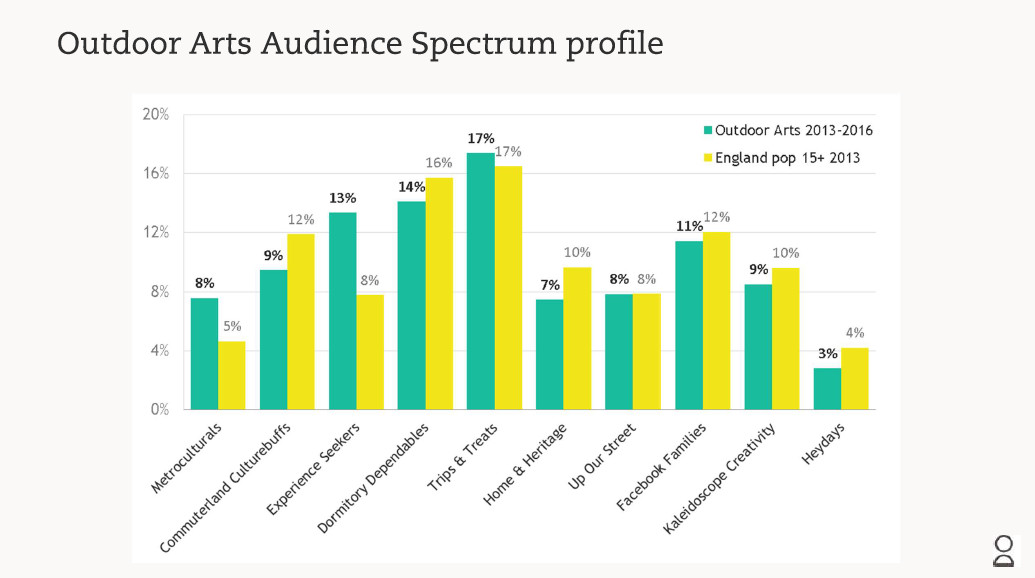
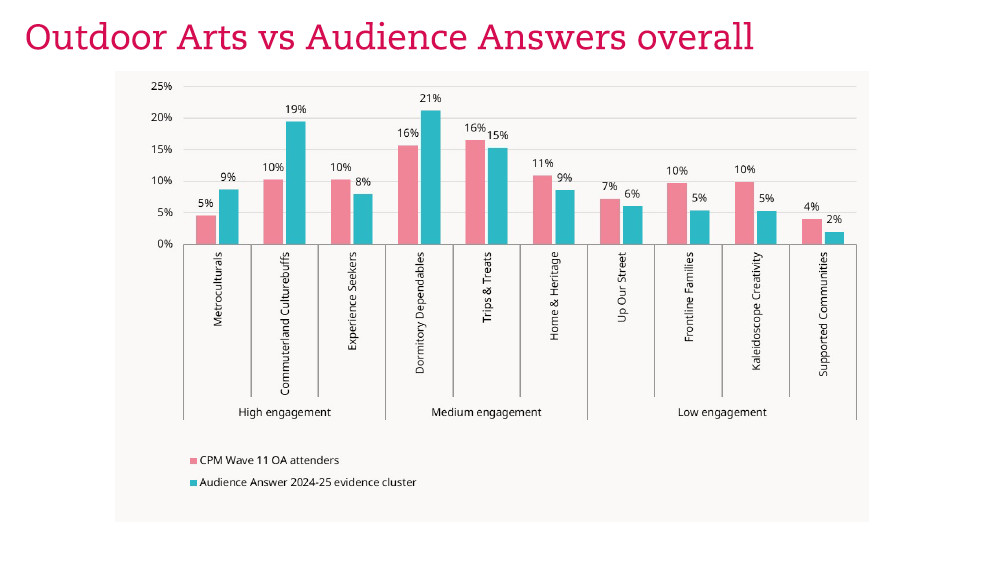
Data from The Audience Agency’s Cultural Participation Monitor (CPM) shows that roughly 22% of the UK population report attending an outdoor festival, carnival, or street arts event — a figure that aligns with other national participation measures.
What makes outdoor arts especially distinctive:
- Audiences closely mirror the demographic profile of the general population
- Attendance is not skewed toward traditional arts-attenders
- Many people attending outdoor arts are infrequent or non-attenders of other cultural activities
- Comparatively attract large numbers, with 500,000 people attending in 2016
This was the case in The Audience Agency’s original audience research data between 2013-2016 and more recent data of 2024/25.
The data comparison is striking when put against classical music audience:

In other words: outdoor arts are broadly inclusive and accessible
What Motivates People to Attend
Across multiple studies, audiences highlighted:
- Fun and entertainment
- Spending time with friends and family
- Surprise and novelty
- The freedom to engage on their own terms
These motivations demonstrate that outdoor arts offer experiences that resonate well beyond traditional cultural participation frames.
Social Impact and Place Connection
Beyond sheer reach, participation in outdoor arts is linked with:
- Increased pride in local communities
- Greater sense of connection with others
- Reimagining familiar public spaces
This underscores outdoor arts’ role in strengthening community identity and social cohesion.
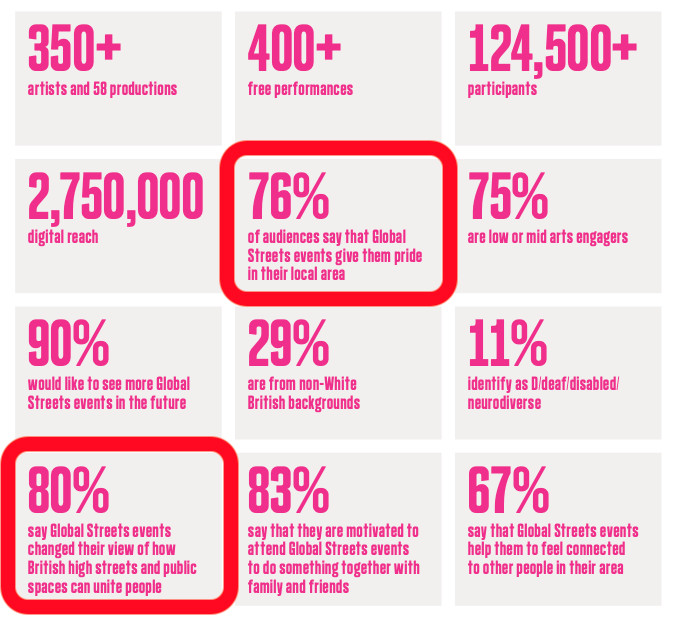
10 years’ worth of data from Global Streets project show that 76% of audiences say positive impact on pride in place, and 80% changed their view of high streets as places for uniting people.
From Evidence to Strategic Action
Following the evidence presentation, our Director Sho offered a powerful provocation for the wider cultural sector:
Outdoor arts are not just exceptions to the rule of cultural participation — their audience-building strengths point toward new possibilities for how the cultural ecology works.
Key Themes in the Call to Action
- Expanding Access Without Diluting Quality
Taking art into public space and removing cost barriers doesn’t cheapen the art — it expands who can meaningfully engage with it. Sho quoted an article by Lyn Gardner of The Stage. - Shared Responsibility Across the Sector
If outdoor arts can attract people who don’t normally attend cultural events, there is an opportunity for:
- Indoor and outdoor organisations to collaborate.
- Outdoor arts to act as a gateway into deeper cultural engagement. By working together, we can create a more seamless pathways for audience development to widen engagement to arts and cultural activities.
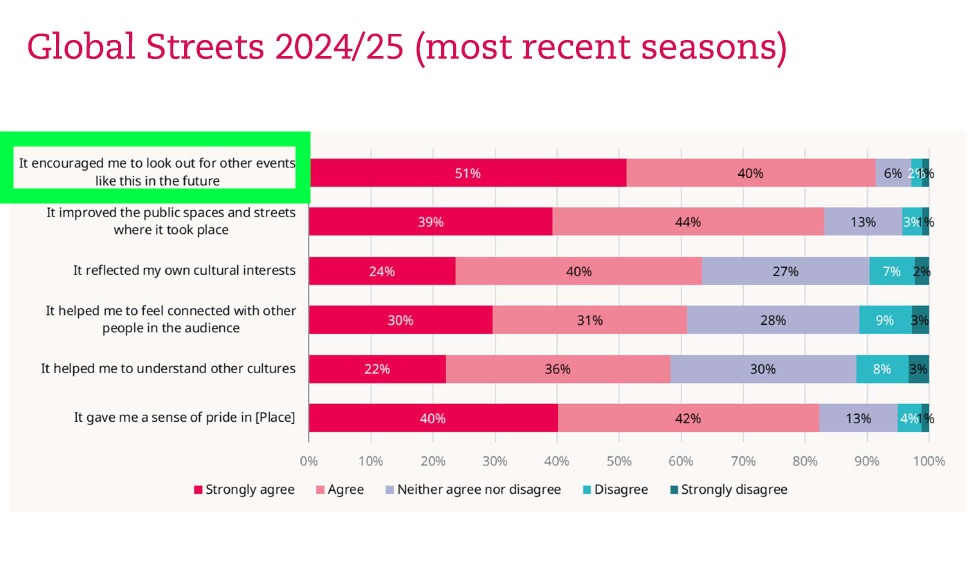
Data from Global Streets show outdoor arts can whet audiences’ appetite for more cultural engagement.
3. Embedding Outdoor Arts in Place-Based Strategy
Examples from Stoke-on-Trent and Grimsby show how outdoor arts can connect audiences to museums, theatres and other cultural institutions, strengthening cultural ecosystems rather than existing apart from them. Sho has previously written about the work in Stoke-on-Trent in an article for Arts Professional here.
Sho also introduced examples of the National Trust working with our sector colleagues to present outdoor art in their nearby public spaces. This was done to bring their social and creative vision to the wider public.

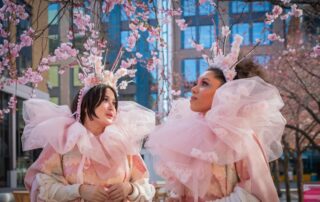

Blossom Watch by Lorna Rees Company, produced by Outdoor Places Unusual Spaces for The National Trust, photo: James Dobson
4. Using Data to Build Inclusive Futures
Publicly funded cultural activity should be reaching the full spectrum of UK population, and Sho believes that funders will begin to look for audience diversity data in more earnest because they are becoming increasingly data driven. He calls on the sectors to begin exploring working together now to be ahead of the curve.
What This Means Going Forward
Outdoor arts aren’t just a different way of presenting work. We offer a different way of thinking about audiences, access and cultural participation.
The evidence shows that:
- Outdoor arts are widely enjoyed across ages, backgrounds and locations.
- They connect people to culture in ways that traditional venues often don’t.
- When integrated into broader cultural strategy, outdoor arts can help close persistent gaps in access and participation.
You can watch the complete session here for full insights, data breakdowns and provocation here.